Design
I made two objects for this assignment, both for things I actually use. The first is a container for the original AeroPress paper filters, sized so it clamps onto the AeroPress plunger itself and travels as part of the unit instead of as a loose accessory. The second is a cooling enclosure for the Samsung X5 portable SSD, with a top plate that mounts three small fans so the drive can stay below thermal throttling during long sustained reads and writes.
I picked these because they sit at the edges of products I already trust. The AeroPress is one of the few objects I own that I find genuinely well made, useful and unobtrusive and finished, but it ships without any way to carry the paper filters cleanly. I have lost filters in luggage, crushed filters in luggage, and ended up at coffee shops asking for napkins. The X5 is another object I think is well made, fast portable storage in a small thermally conductive shell, but its passive cooling gives up on long workloads and the drive quietly slows itself down. Both of these are products I do not want to replace, I want them to keep being good in the situations where they currently fall short.
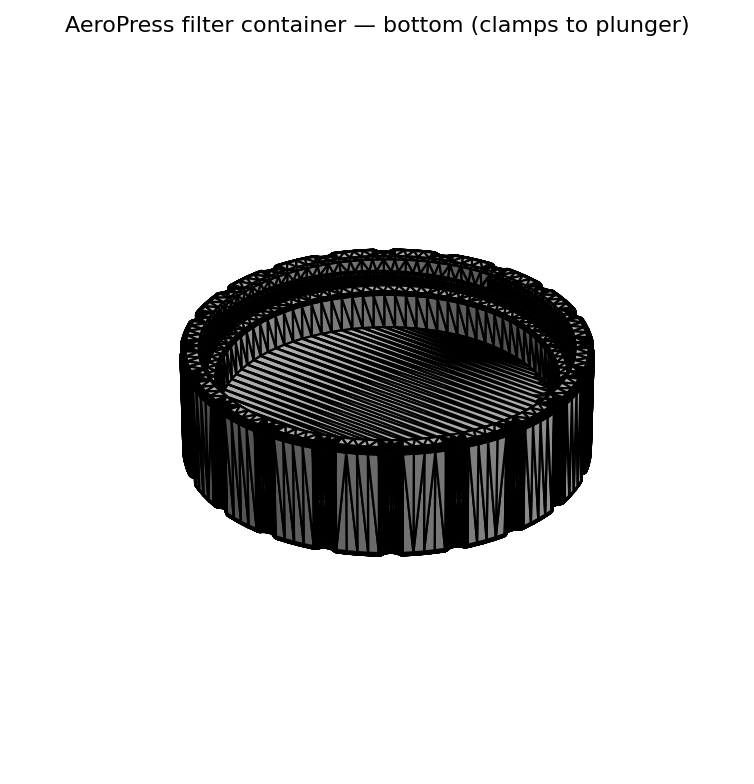
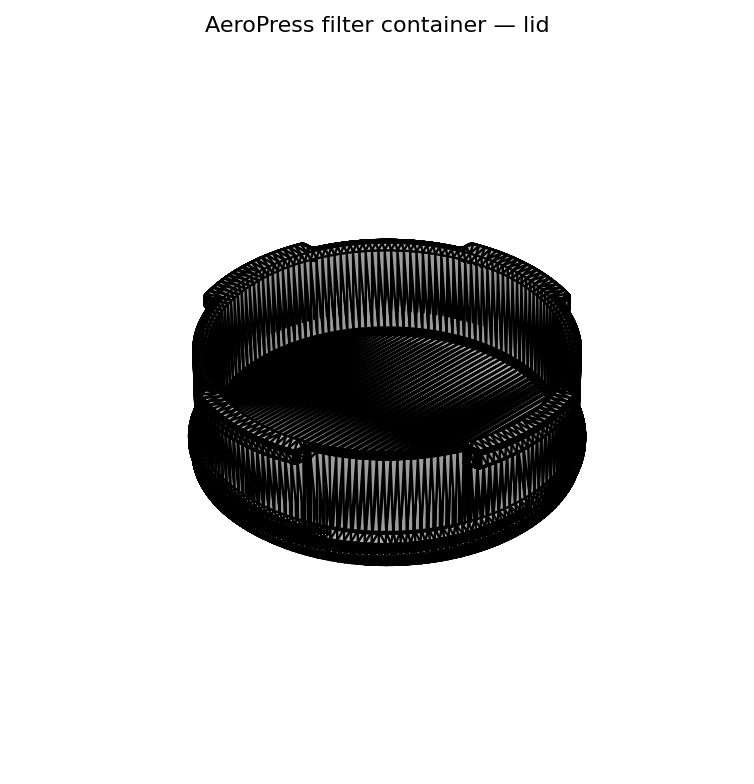
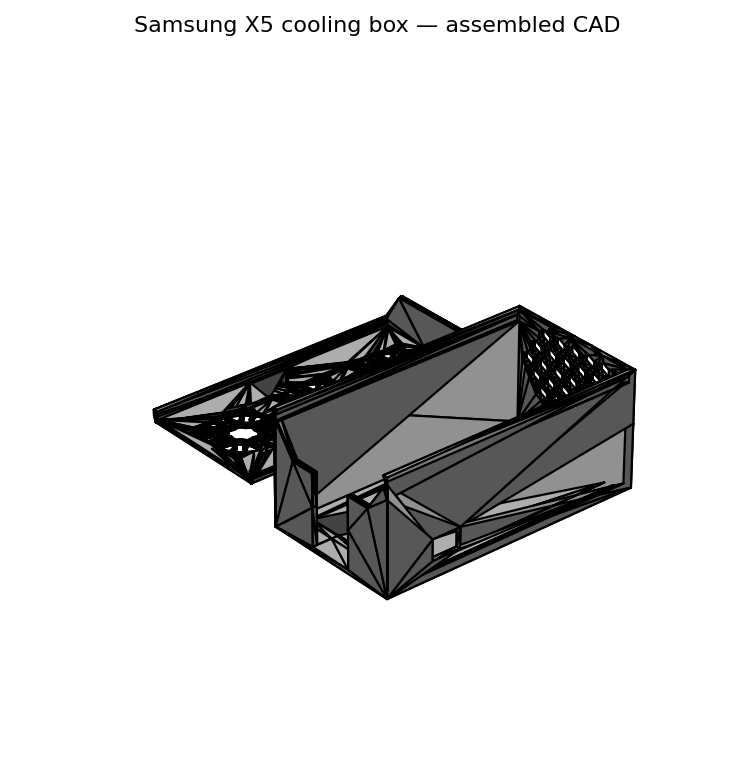
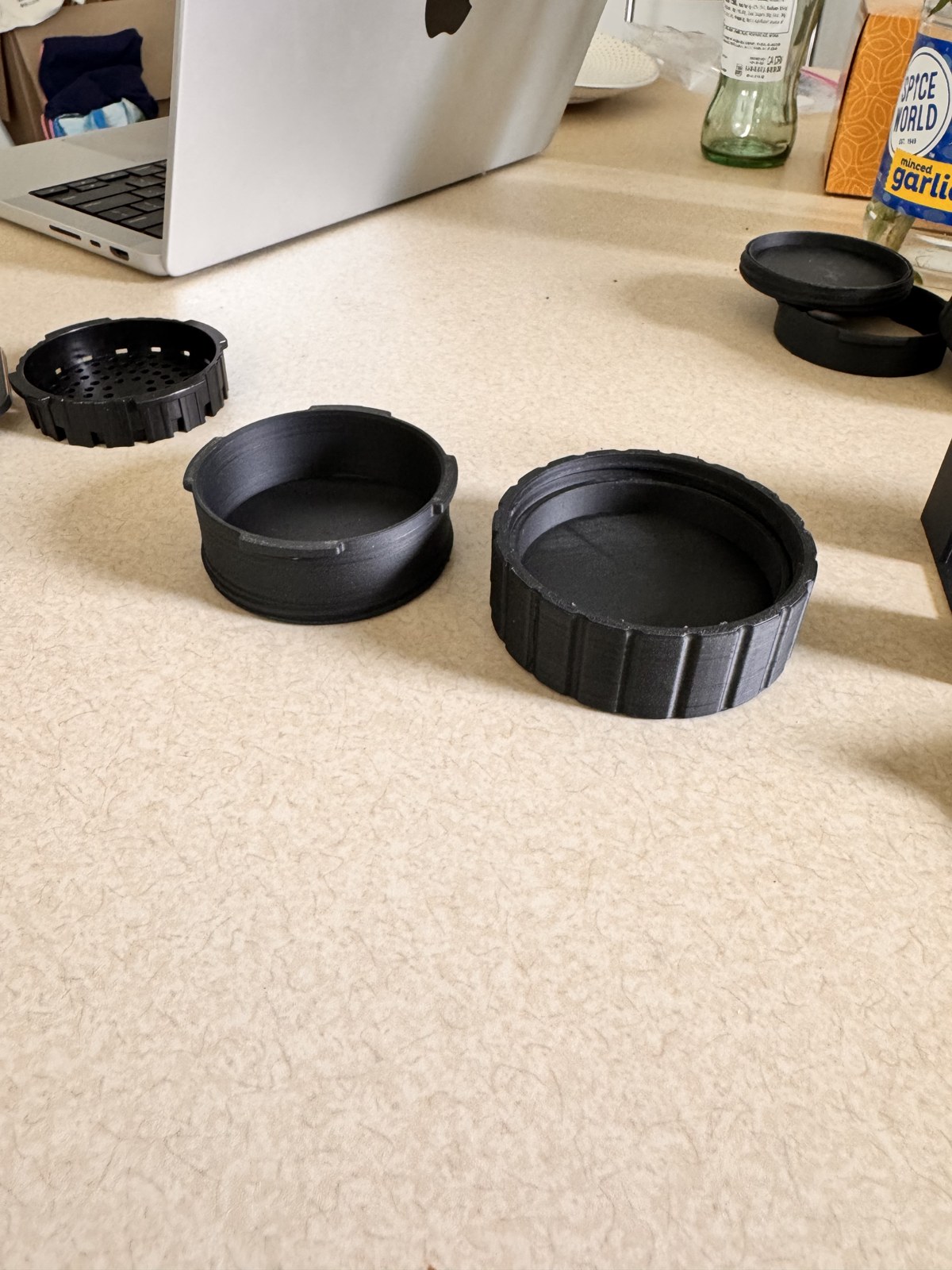
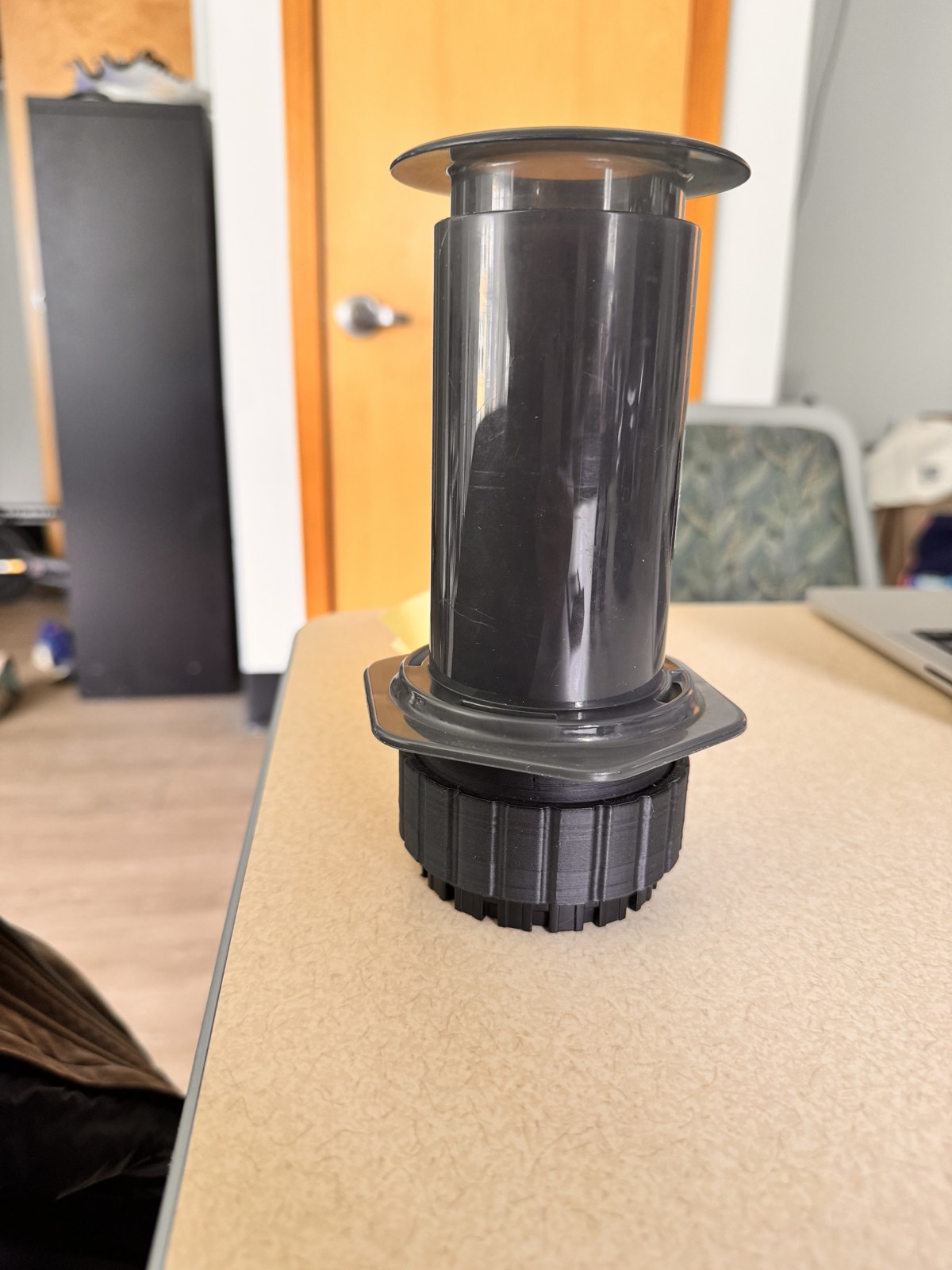
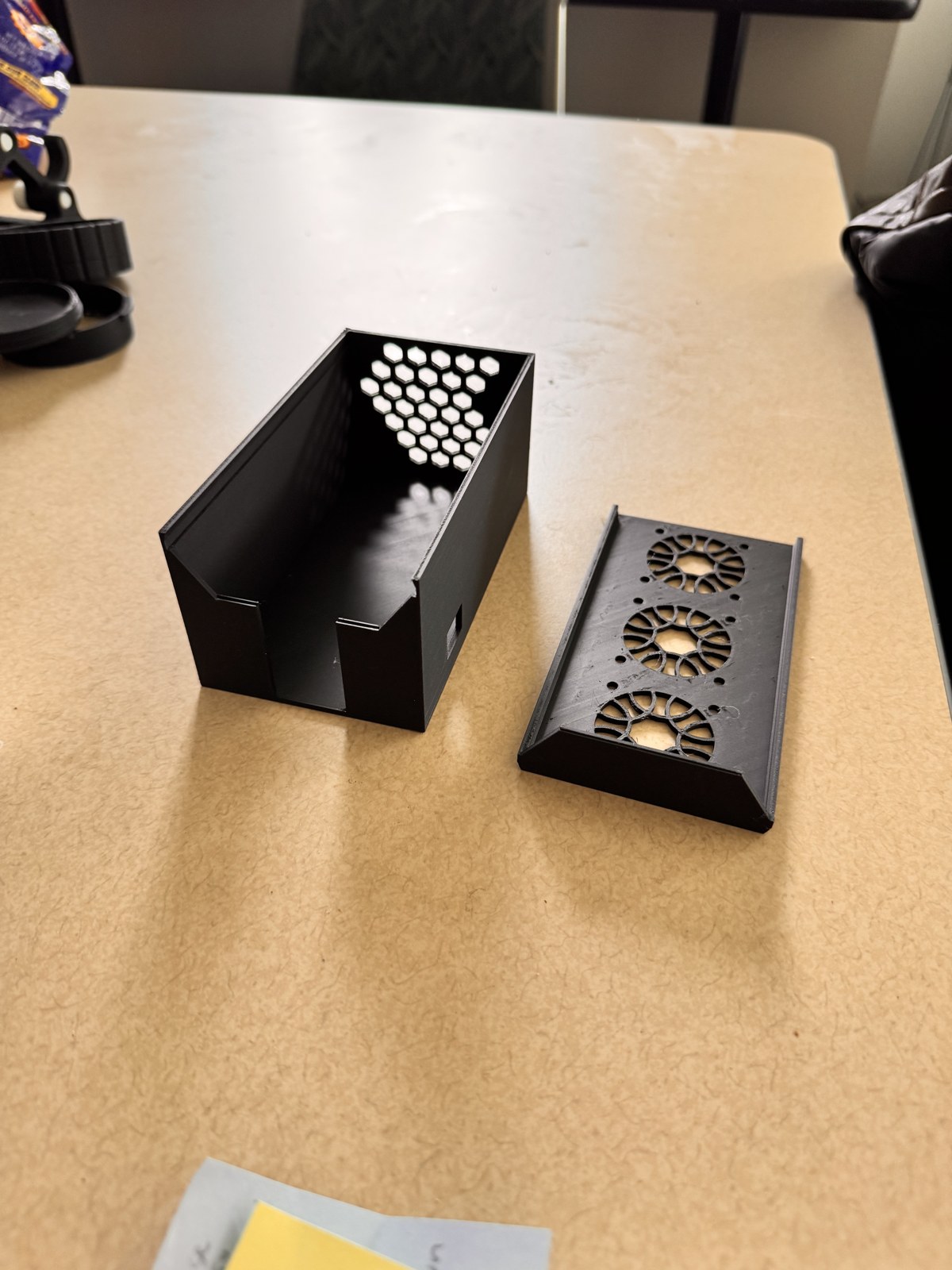
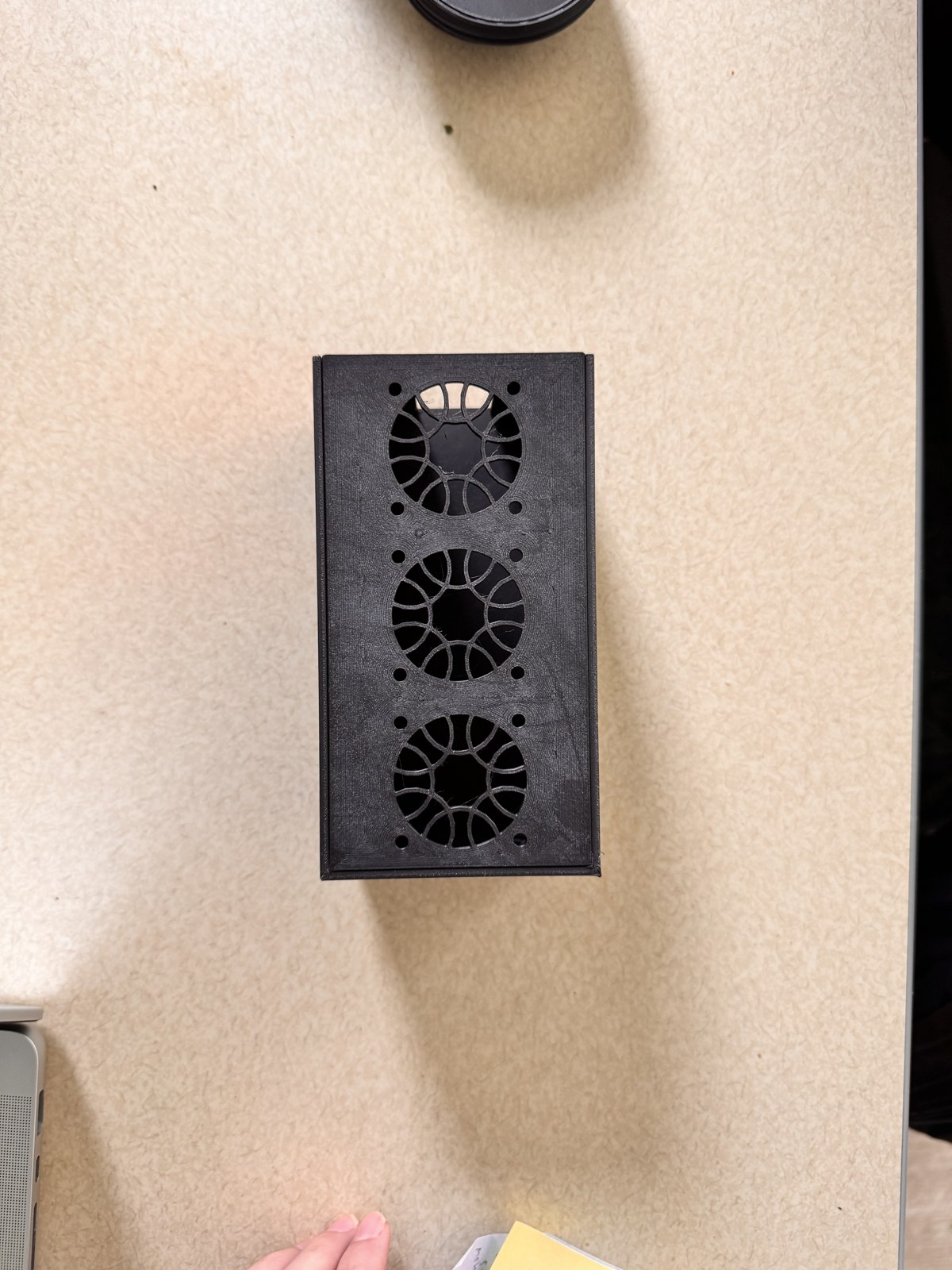
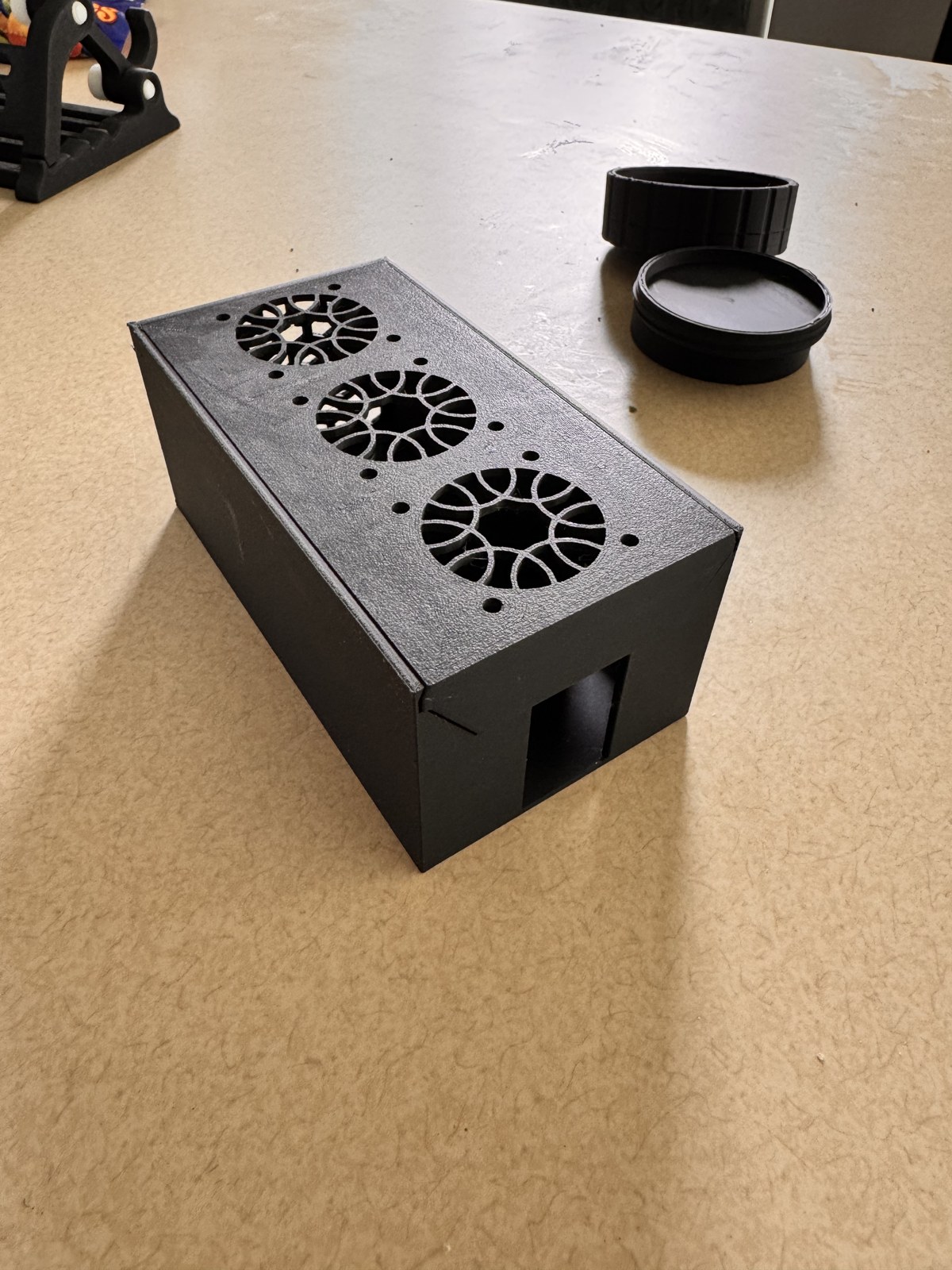
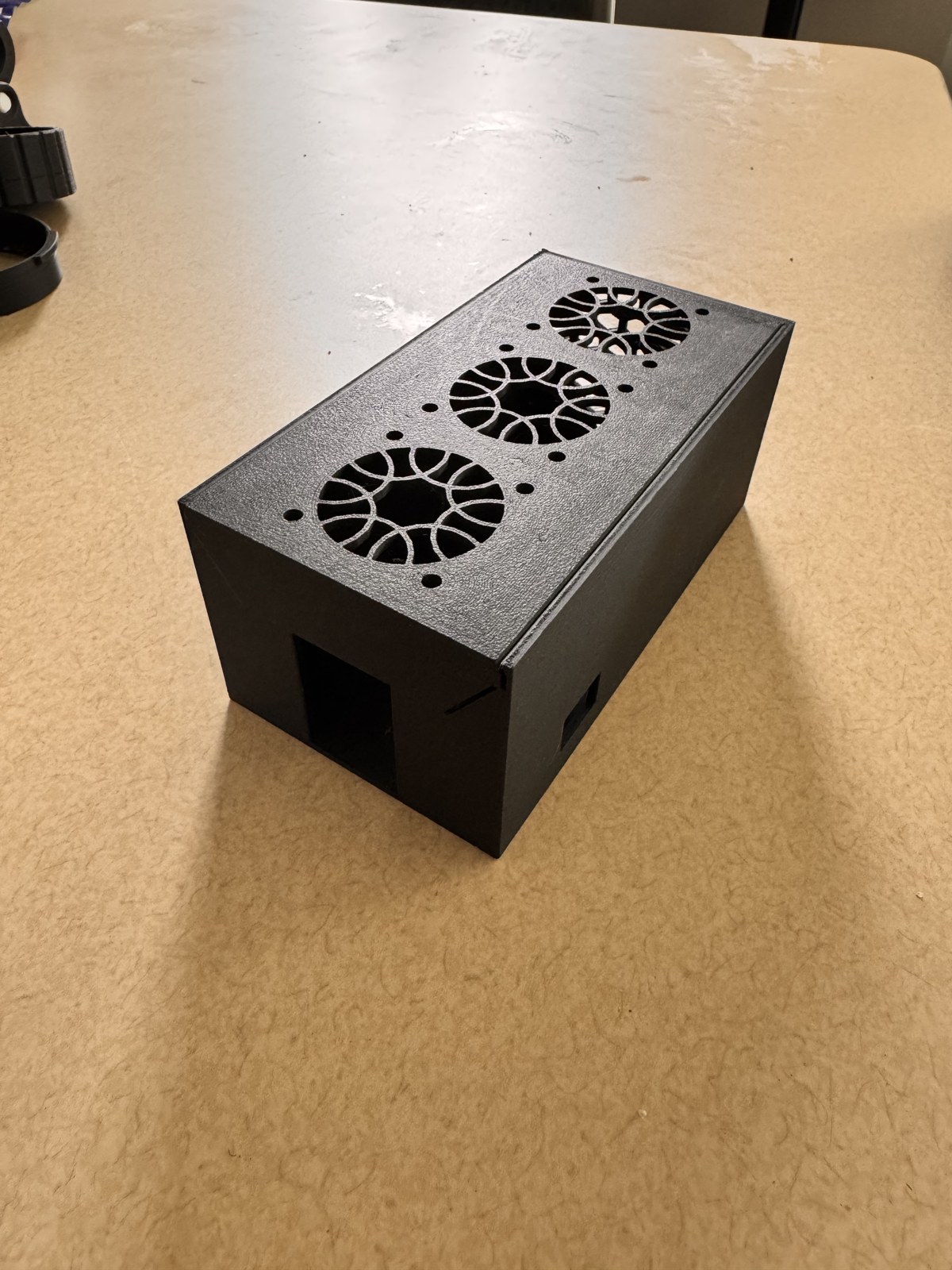
The AeroPress filter container is two parts, a wider bottom that grips the plunger with a thin friction lip and a deeper lid that slides over the bottom on top of a small stack of filters. When the AeroPress is broken down for travel, the container becomes the cap on the plunger end of the unit, so the filters live where the user already has the rest of the brewer. The clamp-and-thread approach for attaching to the AeroPress is not novel, the AeroPress modding community on Printables and Thingiverse has been iterating on screw-on and friction-fit caps for years, and I read through several of those before drawing my own. My version takes the basic clamp idea from those designs and changes the proportions and the lid geometry to fit how I actually use the filters. The cooling box is a rectangular shell sized to the X5, with a slide-in top plate that has three 40mm fan cutouts and a pattern of mounting holes for standard case fans. The drive sits against a hex-vented back wall that lets airflow exit, and a rectangular cutout at the front lets the USB-C cable pass through without binding.
Sketches
Most of my iteration on these two objects happened directly in CAD because both designs are sized to existing physical parts, and dimensioned modeling was more useful than freehand sketching for that. The renders below show the final geometry for each piece, which is the closest thing I have to a detailed sketch of the final design. Earlier iterations were saved as separate part files in Fusion and discarded once the dimensions converged.
Prototype
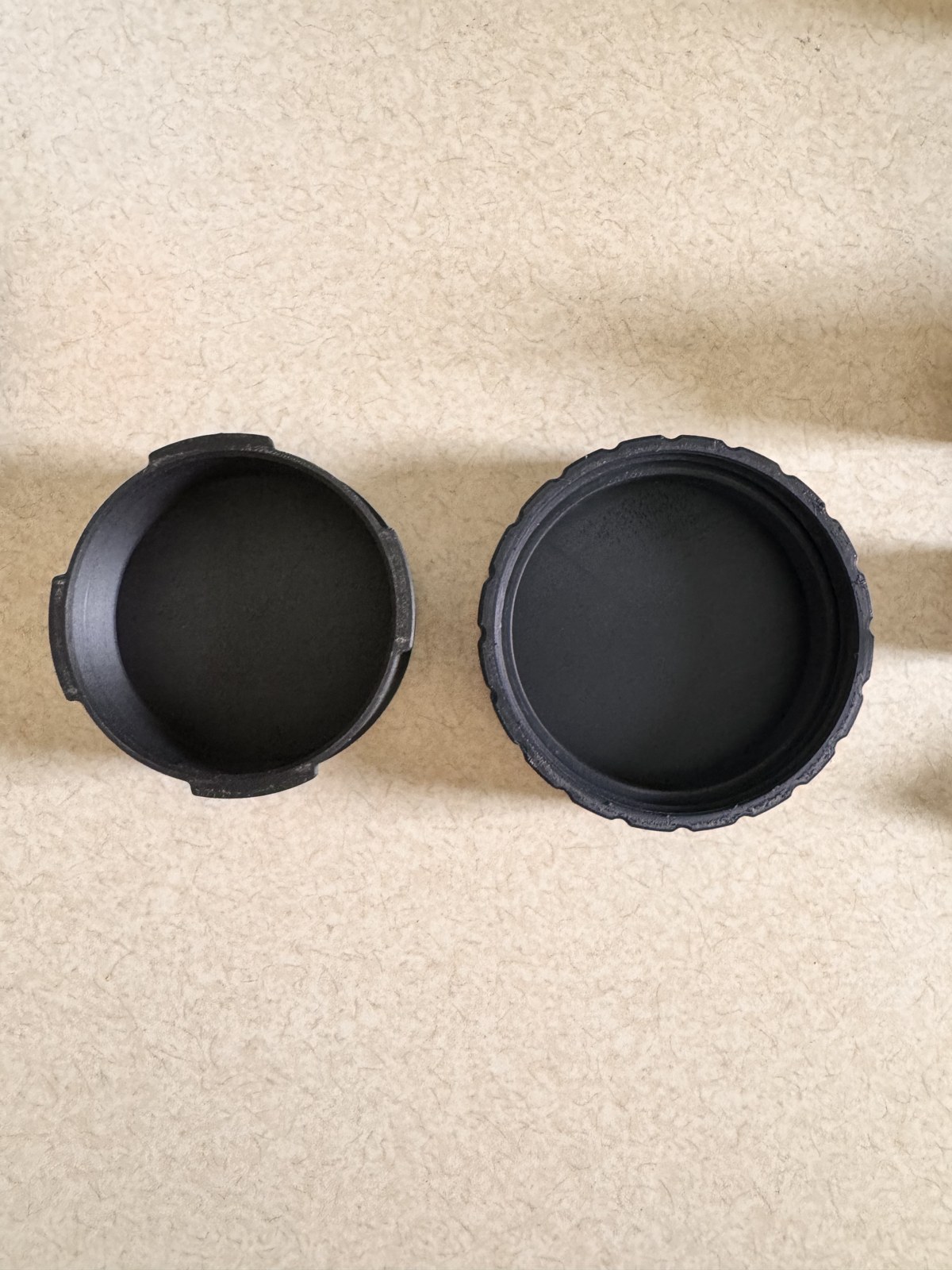
Both parts were printed in PLA on a Snapmaker U1 at 0.2mm layer height with three perimeters and 15 percent infill, sliced in Orca. The AeroPress halves printed in about three hours each. The cooling box took longer because of the larger shell, and the top plate printed separately so the fan cutouts were not bridging across open air.
The first version of the AeroPress bottom was too tight to clamp on by hand. I had to widen the inner diameter by 0.4mm in SolidWorks and reprint, which the feature tree handled cleanly since the dimension lives in one sketch and downstream features update on their own. The cooling box top plate was the opposite problem on the first try, slightly loose, and I added a small lip on the second print to hold it in place when the box is moved.
Analysis
I tested the two prototypes against the four criteria we have been using in class, feasibility, usability, desirability, and impact, and I tried to keep the questions for each one specific to the object rather than generic.
For feasibility I asked whether the parts could be printed reliably on the Snapmaker U1 I have access to, in PLA, without supports, and whether they would survive a few months of being thrown in a bag or sitting on a desk under load. Both objects passed this. The AeroPress container needed no supports because the geometry was kept overhang-friendly, and the cooling box has visible layer lines that I can feel on the outer wall but the structure is rigid and the fan-mount holes lined up with the fans I had on hand.
For usability I asked, with the AeroPress, whether the container actually stays clamped while the unit is in a bag, and whether opening it to take out a filter feels like part of the brewing routine or like an extra step. With the cooling box I asked whether the drive could slide in and out without disconnecting the cable in awkward ways, and whether the top plate would stay seated when the box was moved. The AeroPress container clamps tight enough that I have not had it come loose so far, and the lid pulls off cleanly. The cooling box accepts the drive without trouble, but the USB-C cutout is slightly tight against my specific cable, which is not the cable Samsung ships, so cable choice ends up mattering more than I expected.
For desirability I asked who else would want either of these. The AeroPress filter container has a clear audience, anyone who already travels with an AeroPress, which is a small but real group online. The cooling box is more niche, since most X5 owners do not push the drive hard enough to throttle, but for video editors working off the drive directly the use case is real and the existing market solutions are bulky external enclosures rather than drop-in shells.
For impact I tried to be honest. Neither object solves a problem that matters at any scale beyond personal use. The AeroPress container saves a few minutes of fishing around in luggage, and the cooling box keeps a drive from slowing down on long jobs. Both are quality of life rather than transformative, and I think that is the correct framing for a 3D printed personal prototype.
In the in-class critique the cooling box drew comments first. Reviewers called it unique and personalized, noted that the top plate slides out easily without falling out when the box is held upside down, and described the structure as stable. The AeroPress adapter got picked up next, with reviewers calling out the sizing as well judged, the lock mechanism as nicely done, and the fit as perfect against the AeroPress itself. On both objects the overall response was that the design read well, with one reviewer telling me they loved the design. I am taking the box feedback as confirmation that the slide-in tolerance landed where I wanted, since “easy to remove but does not fall out” is exactly the failure mode the second print was trying to fix, and I would not have known it had landed without someone else picking up the box and turning it over. The AeroPress feedback I am taking as a sign that the most invisible decisions in that piece, the inner diameter, the friction lip, the way the lid catches, are the ones doing the most work, since those are what people noticed even though they are the parts I spent the longest tuning.
What worked well, on the AeroPress side, was the decision to clamp the container onto the plunger rather than build a separate carry case, since that choice is what makes the object feel like part of the AeroPress instead of a separate accessory, and the in-class confirmation of the fit and the lock is what tells me the dimensions actually carried that intent across. On the cooling box, the slide-in top plate worked well, both for assembly and for swapping fan configurations later, and the box-flip test that came up in critique is the part I am happiest about. What needed improvement, beyond fit tolerance, is the visual relationship between the cooling box shell and its top plate. The hex venting on the back is doing real work and I want to keep it, but the top plate currently reads as a separate component bolted on rather than part of one system, and a future revision should let the venting language carry across both surfaces.
My conclusion is that both designs do their job, neither is finished. The AeroPress container is the closer of the two to a final form, because the AeroPress itself sets such clear constraints that there is not much room for the design to drift. The cooling box has more decisions left to make, and the next revision needs to treat the venting and the top plate as one coherent system rather than two functional surfaces that happen to meet at a seam.
Reflection
I chose these two objects because they let me practice on something where I already had strong opinions about how the finished thing should feel. Designing for products I respect is harder than designing in a vacuum, since the bar is set by the object next to it on the desk, but it is also more useful, because the gap between what I made and what it sits next to is visible and specific. Looking at the AeroPress container next to the AeroPress, I can see exactly where my part is louder than it should be.
The frustrations were mostly about tolerance and patience. CAD lets you specify dimensions to a hundredth of a millimeter, but the printer prints what the printer prints, and the gap between the model and the part is where most of my reprints came from. I wish I had known earlier that for press-fit features I should design with a known offset baked in rather than printing at the nominal dimension and being surprised. The slide-in top plate on the cooling box ended up being the cleanest example of getting that offset right, and the box-flip test in critique was the moment that made the choice feel correct rather than just functional.
What I enjoyed was the loop of designing a physical object, holding the print in my hand the next morning, and immediately knowing whether the design was right. Software gives you that loop too, but the answer is rarely as direct as picking up the part and feeling the lid catch or not catch. The hardware loop is slower per cycle but the signal at the end of the cycle is much cleaner.
On the software, I used SolidWorks for both designs and Orca to slice. SolidWorks is good at parametric work and the feature tree made it easy to go back and widen the AeroPress inner diameter without losing downstream features, which is exactly the kind of edit I needed when tolerances were off. The downside is that SolidWorks is heavy, the licensing is its own situation, and the file format does not travel well outside the SolidWorks ecosystem, so a simple share or backup ends up being more friction than I would like. Orca handled both prints without much fuss and the per-feature settings let me bump the wall count on the cooling box without rewriting the whole profile, and I appreciated that the slicer is open and runs locally rather than gated behind a vendor account.
What I am taking away is that the prototype is the conversation, not the conclusion. Both objects are usable, but the more interesting result is the list of small decisions I would make differently next time, and the critique that pointed out the ones I would have missed.
AeroPress filter container draws on the broader community of AeroPress mounting and cap designs published on Printables and Thingiverse, which informed the clamp approach.
Anthropic Claude AI used to format, organize, and proofread this log, along with some minor editing.